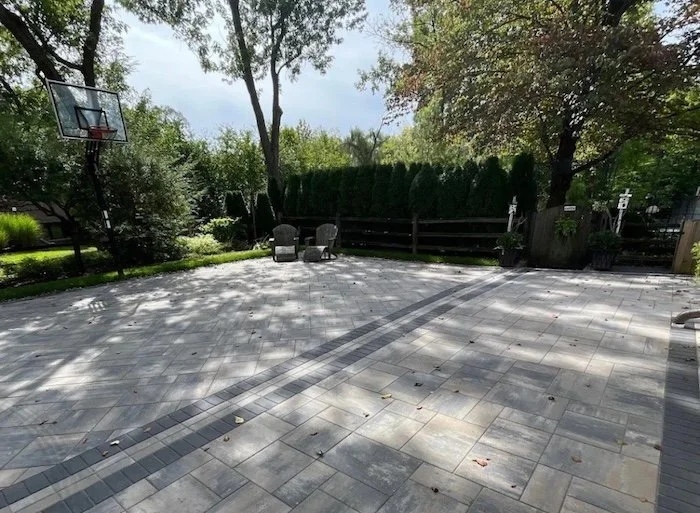
Choosing the right deicer matters more than most homeowners realize. Hardscape materials react differently to each product. Plants do too. A walkway that looks perfect in October can be permanently marked by March if the wrong salt gets used.
This is especially true in colder regions like Michigan, where temperatures swing, thaw cycles hit hard, and deicers are applied all winter long.
Those who understand salt types can protect their installations, reduce warranty issues, and help save money in the long run.
Here is a clear look at the salts you will encounter and how they compare.
What These Salts Mean for Your Hardscape Installations
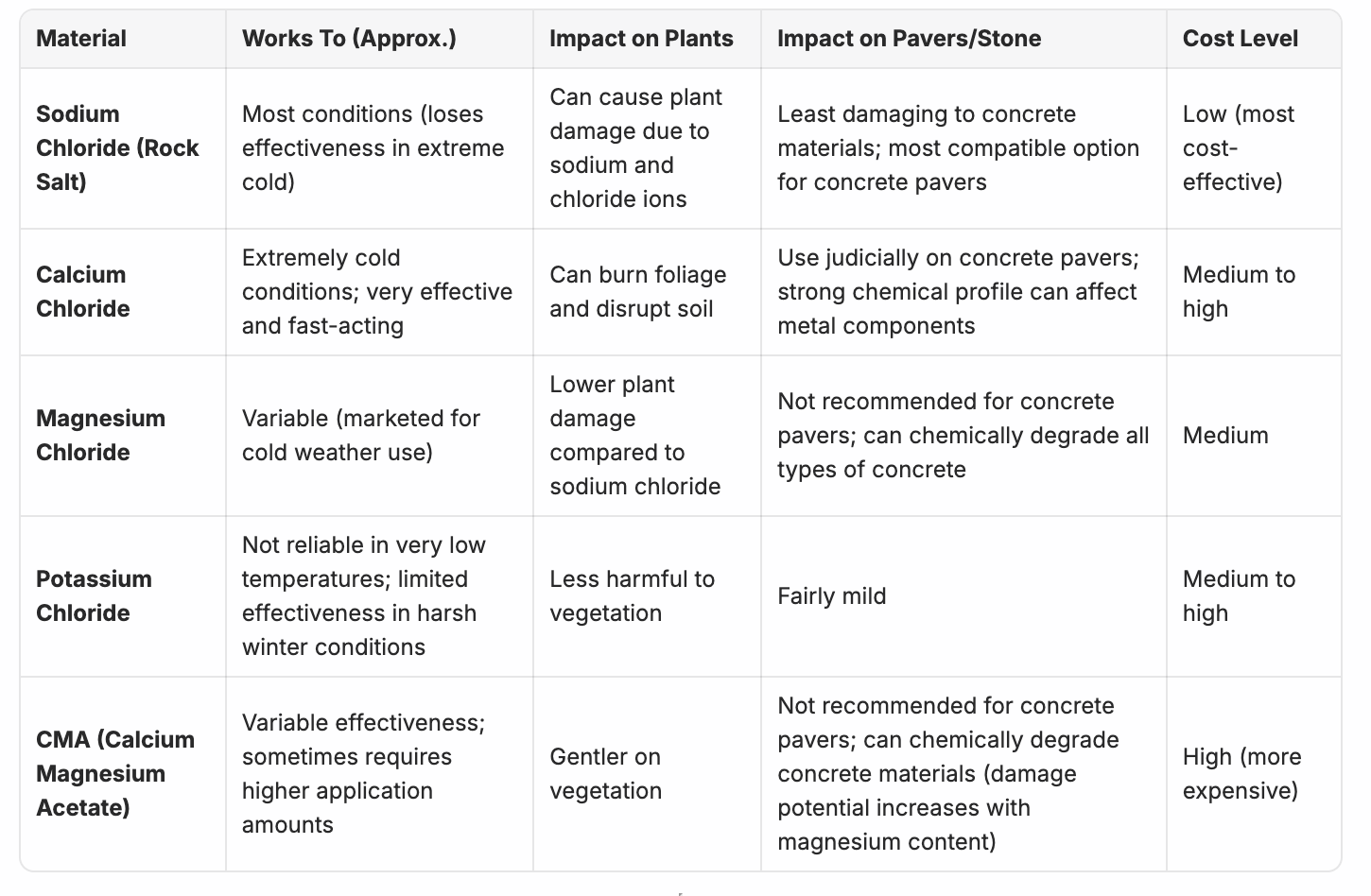
You want materials that melt ice, protect your home, and preserve the integrity of the hardscape. Here's how each salt type actually behaves in real conditions.
Rock Salt (Sodium Chloride)
The most compatible option for concrete pavers and hardscape materials.
Least damaging to concrete materials according to the Concrete Masonry & Hardscape Association
Should be used whenever possible for concrete paver installations
Can cause plant damage due to sodium and chloride ions when it contacts vegetation
Most cost-effective option for hardscape protection
Read more for yourself: How salt works and overview of deicing chemicals—Minnesota Pollution Control Agency; University of Minnesota Extension
Calcium Chloride
Very effective in cold temperatures and fast acting.
Recommended by the Concrete Masonry & Hardscape Association when a quicker-acting deicer is necessary
Use judiciously on concrete pavers
Strong chemical profile that can affect metal components around the installation
Works well in extremely cold conditions where rock salt loses effectiveness
Magnesium Chloride
Not recommended for concrete pavers.
Can chemically degrade all types of concrete, significantly increasing potential damage
Studies show lower plant damage compared to sodium chloride
Despite being marketed as "safer," it poses greater risk to hardscape materials
Should be avoided on concrete paver installations
Potassium Chloride
Often used where plantings sit directly against walkways.
Less harmful to vegetation
Not reliable in very low temperatures
Limited effectiveness in Michigan's harsh winter conditions
CMA (Calcium Magnesium Acetate) and Acetate Products
Not recommended for concrete pavers.
The potential for damage from CMA increases with the amount of magnesium in the formulation
Can chemically degrade concrete materials
More expensive and sometimes requires higher application amounts
Despite being gentler on vegetation, poses risks to hardscape integrity
Read more for yourself: Watershed-friendly Deicing from Penn State Extension
What Makes a Salt "Hardscape Approved"?
As you can see, every product behaves differently on concrete pavers, natural stone, and the soil and plants around your walkway. The wrong salt can leave white stains on your patio, speed up surface wear, or burn nearby landscaping. The right one keeps paths safe without creating long-term damage.
That is why many contractors and manufacturers talk about certain products being "hardscape approved." It is not a marketing term. It is a way to help homeowners understand which deicers protect their investment and which ones increase the risk of avoidable repairs.
Material compatibility: Some salts accelerate surface scaling, spalling, or efflorescence. For concrete pavers specifically, rock salt (sodium chloride) is the least damaging option. Products labeled "safe for concrete pavers" or "safe for masonry" matter, but always verify recommendations against industry standards from organizations like the Concrete Masonry & Hardscape Association.
Landscape impact: Sodium chloride and calcium chloride can burn foliage and disrupt soil. Protect vegetation and metal from contact with deicing chemicals, as most can impair vegetation and corrode metals.
Cold-weather performance: Michigan winters require materials that actually melt ice during extended cold periods. Rock salt works for most conditions, with calcium chloride reserved for when faster action is needed.
Environmental considerations: While lower-chloride products may seem environmentally friendlier, the primary concern for hardscape installations is material compatibility. The best approach is using only as much deicer as needed to do the job.
Documentation: An approved product should come with MSDS sheets, application rate guidance, and surface compatibility notes. Always check recommendations from the Concrete Masonry & Hardscape Association for concrete paver installations.
Practical Recommendations for Michigan Hardscapes
It's common for homeowners to spread whatever salt they have on hand, but as we've seen, it's important you understand the real differences between your options.
For concrete paver walkways and patios: Rock salt (sodium chloride) should be your primary choice. It's the least damaging to concrete materials and most cost-effective.
For extreme cold conditions: Calcium chloride can be used judiciously when faster ice melting is necessary and temperatures drop very low.
For natural stone installations: Consult with your installer or manufacturer, as natural stone may have different compatibility requirements than concrete pavers.
Products to avoid on concrete pavers: Magnesium chloride and CMA-based products, despite marketing claims about being "safer," can chemically degrade concrete and should not be used on concrete paver installations.
Best Practices for Maintenance
Using the right ice melt is only part of protecting your patio or walkway during winter. How you maintain the area matters just as much. These are the key practices homeowners should follow to keep hardscape surfaces in good shape through the season:
Clear snow early to reduce how much salt is needed. Do not use deicing chemicals in place of snow removal. Reserve them for melting ice formed by freezing precipitation or freezing snow melt.
Apply only what is required. A key to successfully using deicing materials on concrete pavers is using only as much is needed to do the job. This maximizes benefits while minimizing damage to the pavers and surrounding environment.
Remove loosened snow and ice promptly. Once loosened, snow, ice, and excess deicing salts should be promptly removed by plow or shovel to avoid a buildup in concentration of the deicing chemicals.
Do not pile salted snow against retaining walls or planting beds. This protects both your hardscape structures and vegetation from prolonged salt exposure.
Rinse surfaces in spring to dilute remaining chloride and remove any residual deicing materials.
Avoid sand on permeable pavers. Do not use sand for traction on permeable interlocking concrete pavers. If used, sand must be removed with vacuuming in the spring to prevent surface infiltration. When winter traction is needed, jointing aggregate is a better alternative.
Ready to protect your patios and walkways with confidence?
For expert installation or maintenance of your hardscape, contact Decra-Scape today.
