
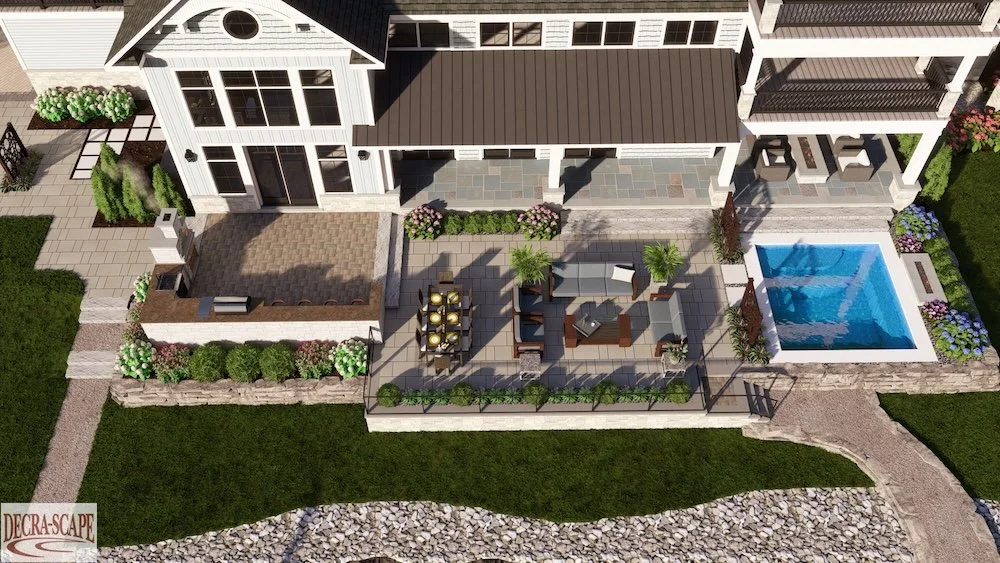
Most luxury outdoor living lists read like shopping suggestions: add a fire pit, upgrade your cushions, install string lights. That's not luxury design; it’s simply buying products.
Plus, you probably already knew that buying more expensive items could feel like a luxury fix.
But the fact is, something more essential separates a $40,000 outdoor renovation that feels transformative from a $200,000 update that feels hollow: the game-changer is the design framework behind the project, not the budget.
What Actually Defines “Luxury” in Outdoor Living? (It's Not What You Think)
Again, Luxury outdoor design is less about budget and more about how well the space fits the people using it. As in, their sensory preferences, their rituals, their climate, their personal style.
That’s why one homeowner’s luxury can look like a Moroccan-tiled courtyard with a hand-carved stone fountain, cascading hydrangea, and clematis climbing through wrought-iron screens, while another reflects a minimalist approach, like a single slab of honed basalt beside a carefully planned planting design, all designed to create a quieter, more contemplative atmosphere.
Both are luxury. Neither is defined by what it costs per square foot.
As you’re considering your own space as well as the experts who might help you shape it, take careful note of how they view the space between sustainability and opulence. Is this gap seen as a point of tension, or one of opportunity? The most prestigious residential landscape projects now treat ecological responsibility as a design constraint that sharpens creativity rather than limiting it.
Sophisticated outdoor spaces increasingly prioritize sustainability through durable natural materials, regionally appropriate planting design, efficient lighting systems, and infrastructure built for long-term performance.
The 5 Design Pillars of a Truly Luxurious Outdoor Space
Pillar 1: Biophilic Integration
Biophilic design focuses on forging connections between people and nature by integrating natural elements into built environments. The key is to move beyond a basic "add plants" mentality; instead, living systems are woven into the hardscape architecture. Think plant selections that complement the architecure of the home, sequential blooms throughout all growing seasons, layered canopy structures, and evergreen screens that act as layered plantings for privacy and noise reduction, creating both privacy and acoustic separation.
Pillar 2: Smart Materials
Premium outdoor design demands materials selected for 4-season performance, not showroom appeal. In Michigan, material selection matters. Some products look great the first year but struggle after repeated freeze-thaw cycles. So we typically steer clients toward materials that hold up long term, not just what looks best in a showroom. It’s also important to consider factors like humid summers or heavy tree coverage. In areas with dense shade and moisture retention, proper drainage and mildew-resistant finishes matter just as much as the surface material itself.
Pillar 3: Technology Layer
A well-designed outdoor space also depends on what you don't see: the wiring runs concealed from view, the hidden drainage systems, and the ability to control multiple outdoor zones seamlessly. Imagine smart outdoor lighting with programmable scenes, warm-dim transitions, and layered zoning; integrated hydronic patio heating systems; weatherproof audio systems with buried conduit for future upgrades; and more.
Pillar 4: Wellness Infrastructure
This is the most underscored pillar in typical residential projects. Think cold plunges adjacent to custom sauna retreats, screened yoga platforms oriented for morning light, and hammock lounges buffered by immersive planting for privacy. Wellness features can be the reason an outdoor space gets used daily rather than occasionally.
Pillar 5: Artisan Identity
Does the space have a personality? The best backyards reflect the homeowner’s distinct design perspective. Imagine a hand-forged steel sculpture, custom stone detailing that references the home’s architectural character, or a pergola designed by a local craftsperson rather than sourced from a big-box catalog.
12 Luxury Outdoor Living Ideas for a More Elevated Backyard
Once the foundational design principles are in place, the next step is applying them in ways that improve how the space feels and operates day to day. The best luxury outdoor environments are not built around isolated features. They are shaped around entertaining patterns, seasonal use, comfort, privacy, and long-term durability.
Bespoke Outdoor Kitchens and Dining: The Centerpiece Worth Investing In
When designed for multi-season function rather than summer novelty, an outdoor kitchen is often the single highest-ROI investment in terms of use and enjoyment.
Layout principle: Apply the indoor kitchen work triangle to outdoor conditions. Your grill, prep surface, and refrigeration should sit within a 10-foot triangle. Prevailing wind direction should inform grill placement: smoke blowing toward your dining zone kills the experience regardless of how beautiful the stone countertop is.
Material matrix: Leathered granite or porcelain countertops perform well against humidity, pollen, and freeze-thaw swings. Powder-coated aluminum and 304/316 stainless appliances resist corrosion and seasonal moisture. Thermally modified wood, high-end composites, or masonry cabinetry reduce long-term maintenance compared to traditional stained lumber.
Luxury Poolside and Water Feature Design
Cabana design is where many pool projects lose coherence. A cabana that doesn't echo the main home's material palette looks out of place. Aim for similar stone species, trim color, or roof pitch, or the additional structure may read as an afterthought, regardless of what it costs.
Naturalistic vs. geometric water features: Naturalistic water features (boulder waterfalls, koi ponds with planted margins, etc.) are beautiful. But it’s important to be realistic about your plans for maintenance, since such designs can require 3 - 4x more maintenance than geometric infinity edges or deck-level lap pools. Be honest about your tolerance before specifying. A neglected naturalistic water feature is worse than no feature at all.
Privacy as design: Privacy is essential for yards with pools, and the options are vast. Stone or brick privacy walls create separation and seating while reinforcing the site’s architectural character. Pergolas or pavilions can add privacy and shade while functioning as dramatic focal points within the yard. Living screens of American Arborvitae do well in the southeast Michigan climate, and they often establish quickly while maintaining a softer, more natural look than traditional fencing.
Lighting, Technology, and What’s Ahead
Layered lighting is non-negotiable: ambient (overhead or wall-wash), task (prep and cooking zones), and accent (uplighting specimen trees, grazing textured stone walls). One ratio that works well is 60% ambient, 25% accent, and 15% task.
Smart systems: Many homeowners seek app-controlled zoning, programmable scenes, and warm-dim transitions that allow outdoor spaces to shift naturally throughout the evening. This allows outdoor spaces to transition from brighter entertaining settings earlier in the evening to warmer, more intimate lighting later at night. Security integration (motion-triggered zone brightening) adds functional value without visible hardware.
Outdoor cinema: This is a standout backyard addition designed for making memories. Thoughtfully integrated outdoor cinema systems, including concealed audio, buried conduit runs, and retractable projection screens, allow entertainment spaces to remain visually refined even when the technology is not in use.
3 - 5 year trend forecast: Luxury outdoor spaces will likely continue moving toward quieter technology integration, including adaptive lighting scenes and weather-responsive irrigation. Sustainable best practices will continue to evolve, and demand for them will become more mainstream every day. Unique indoor/outdoor living spaces will grow in popularity; think fully integrated garden rooms that function as seamless extensions of the home.
How to Curate a Personalized Luxury Outdoor Space: A Process, Not a Shopping List
Start with lifestyle mapping. Document how you actually use outdoor space across all 4 seasons. Most clients discover that they use their outdoor space 60% less than expected, primarily because it wasn't designed around their real patterns.
Multifunctional elements earn their square footage: a dining table that converts to a fire table, a pergola with motorized louvers functions as a rain shelter and a shade structure, etc. Smart solutions signal thoughtful design.
The best outdoor spaces aren’t built from a checklist. They come from understanding how a family actually wants to live outdoors and designing around that from the beginning. When you’re ready to get started, we’re here to help.
